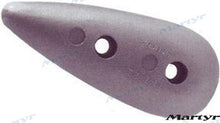
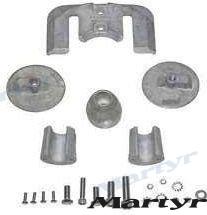
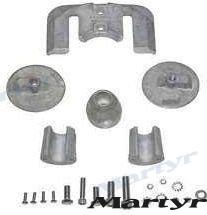
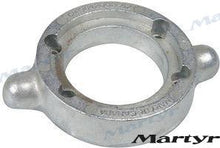
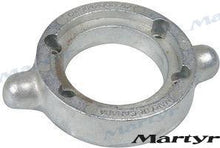
image of a collection of boat anodes on a white background

Shop All Marine Anodes

Anodes are a consumable part that protect metal components from galvanic corrosion. If yours are heavily wasted, broken, or missing, replacing them is a simple way to reduce avoidable wear on drives, hull fittings, propellers, and engine cooling systems. This collection brings together marine anodes across popular brands, materials, and mounting styles.


⛓ Live stock levels | 📲 expert help | 📚 Large catalogue

How do I know which anode I need for my boat?

Start with what the anode protects, sterndrive, saildrive, outboard, shaft, hull fitting, propeller, or engine cooling system. Then confirm the make and model, plus year or serial where possible. Match the anode’s shape and dimensions, including hole spacing, thickness, and fixing type. If you can find a part number on the old anode or your parts diagram, use that to confirm. Photos of the anode position and the old anode are often the quickest way to verify.

Which anode material should I choose, zinc, aluminium, or magnesium?

Choose based on your typical water type. Zinc is commonly used in salt water, aluminium is widely used in salt and brackish environments, and magnesium is generally used in fresh water. If your boat moves between waters, pick based on where it spends the majority of the season. Do not guess if you are unsure, because the wrong material can waste too quickly or not perform as expected. If you tell us where you boat and what the anodes fit, it is easier to guide the choice.

Why are my anodes wearing out very quickly?

Fast wastage can happen if the anode material is not suited to your water, if the boat has stray current issues, or if bonding and connections are poor. Check that the anode has clean metal-to-metal contact and is not painted over. Inspect bonding straps and wiring for corrosion, and consider whether shore power, battery chargers, or nearby boats could be contributing. Also confirm you have all the anodes fitted that your setup requires, because missing anodes can force the remaining ones to work harder.

2446 produits

Choosing the right marine anode for your setup


Start with location, then match the exact shape

Anodes are not one-size-fits-all. Identify where it fits, such as trim ram, cavitation plate, transom plate, heat exchanger, or shaft, then match the shape and measurements. Hole spacing and thickness are common return causes. If the old anode has no markings, a quick photo beside a ruler often provides enough detail to confirm the correct replacement.


Pick the right material for the water you boat in

Material choice matters because different waters conduct electricity differently. Zinc is commonly used in salt water, aluminium is often chosen for mixed or salt environments, and magnesium is typically used in fresh water. If you move between waters, choose based on where the boat spends most of its time, and avoid mixing materials on the same protected system unless your setup specifies it.


Shop Anodes by Material: Zinc Anodes | Magnesium Anodes | Aluminium Anodes


Replace on a schedule, and check bonding basics

Anodes only work when they have good contact and are not insulated by paint, heavy oxide, or loose fixings. When installing, clean the contact surface, tighten fixings correctly, and inspect any bonding straps for corrosion. A quick mid-season inspection helps you spot rapid wastage, which can be a sign of wiring faults, shore power issues, or missing anodes elsewhere.